



30 Oct How to Arrange Safe Transportation After Cosmetic Surgery
Last Updated: October 30, 2026
Quick Summary
Arrange safe transportation by first confirming your surgical facility’s transport rules, since many prohibit standard rideshares, then booking a transport type that matches your procedure and mobility. Book early, confirm door-to-door help, and disclose any drains, oxygen, or other equipment.
- Most patients should not drive themselves home after anesthesia or sedation.
- Ask your surgical center whether rideshare is allowed or whether a licensed escort is required.
- Book your ride a few weeks before surgery and confirm the pickup window the day before.
- Choose ADA-compliant or stretcher transport if you have limited mobility or need equipment.
- Consider a private nurse if you live alone, have complex needs, or need clinical oversight during transport.
Table of Contents
- Why You Shouldn’t Drive Yourself or Take a Standard Rideshare Home
- Step 1: Confirm Your Surgical Facility’s Transportation Requirements
- Step 2: Choose a Transport Option That Fits Your Procedure
- Step 3: Schedule Your Ride and Plan Door-to-Door Assistance
- Step 4: Prepare Your Home and Your Caregivers for Discharge Day
- When Hiring a Private Nurse for Post-Surgery Transport Makes Sense
- Booking Your Safe Ride Home After Your Procedure
- Frequently Asked Questions
Why You Shouldn’t Drive Yourself or Take a Standard Rideshare Home
Getting home safely after cosmetic surgery is harder than most patients expect. Many people plan for the procedure itself but overlook the ride home, which is often the first real test of the recovery plan.
Anesthesia and sedation can affect you long after the procedure ends. Driving yourself is almost always a bad idea, and the reasons go beyond simple caution.
What anesthesia and sedation do to your reaction time
Sedation can slow your reflexes, blur your judgment, and make you drowsy for hours. You may feel fine when you wake up, but your body is still recovering. Your surgical team will usually give you guidance on when it is safe to drive again.
Choose your ride before the day of surgery, not after.
Why standard rideshare services are often prohibited
Many surgical facilities do not allow patients to leave in a standard rideshare. Some require a licensed adult escort, and others only release patients to a responsible adult who will stay with them. Check your facility’s rules early, because a ride that breaks policy can delay your discharge.
Step 1: Confirm Your Surgical Facility’s Transportation Requirements
Start by asking your surgical center exactly what they require. Requirements vary, and a clear answer now prevents problems on discharge day.
Ask these questions:
- Does the facility require an escort to take you home?
- Can a rideshare or taxi take you, or must it be a private driver?
- Do you need an adult to stay with you overnight?
Write down the answers and keep them with your pre-surgery paperwork. Share them with the person who will drive you.
Step 2: Choose a Transport Option That Fits Your Procedure
Not every ride suits every patient. Your procedure, your mobility at discharge, and the equipment you are leaving with should drive the choice, not price alone. The table below is a starting point; confirm specifics with your surgical team and the transport provider before you book.
| Transport type | Best for | What to confirm before booking |
|---|---|---|
| Standard rideshare or taxi | Rarely appropriate immediately post-op; some facilities prohibit it | Whether your facility allows it at all; whether a responsible adult must ride with you |
| Private car service with a licensed driver | Ambulatory patients with a caregiver at home | Door-to-door assistance, vehicle size for post-op positioning, driver training |
| Non-emergency medical transport (NEMT) | Patients needing a stretcher, wheelchair, or oxygen | Vehicle type, attendant credentials, equipment tie-downs, insurance acceptance |
| Concierge nurse transport | Patients living alone, complex procedures, or clinical oversight needs | Nurse licensure, monitoring equipment, handoff to caregiver |
ADA-compliant and wheelchair-accessible vehicles
If you have limited mobility, look for an ADA-compliant vehicle. Accessibility requirements for transportation providers vary by provider and market, so confirm what the vehicle offers before you book. Confirm the vehicle type when you book, not when it arrives, and ask whether the driver is trained to operate the lift and secure a wheelchair independently.
Stretcher transport and specialized medical equipment compatibility
Some patients need more than a seat. Stretcher transport may be appropriate after certain procedures, particularly when the surgical team wants the patient reclined or when mobility is significantly limited. Treat the following as a checklist:
- Surgical drains (Jackson-Pratt, Penrose, or similar): Ask the provider how drains will be secured during the ride so they are not pulled or compressed. Bring a small bag or clip to keep tubing contained.
- IV poles and infusion pumps: Not every vehicle can secure an IV pole. Confirm whether the provider supplies a pole mount or whether the surgical center will discharge you without ongoing infusion.
- Oxygen and respiratory equipment: Portable oxygen concentrators and tanks have specific securement and ventilation needs. Tell the provider the device type and flow rate in advance.
Disclose all equipment when you book, since late disclosure can delay or prevent a transport.
Local versus long-distance transport
Local rides are usually straightforward, but a long-distance trip, for example, traveling back to your home city after destination surgery, needs more planning. Longer trips benefit from extra preparation:
- Rest stops: Plan for breaks every 60-90 minutes if your surgeon permits. Ask the provider whether the driver can help you out of the vehicle and back in safely.
- Seating position: Reclining may be limited in standard vehicles. Ask whether the vehicle allows a reclined seat or a bench configuration.
- Monitoring: For longer trips, many patients prefer private transport with an attendant who can watch for drowsiness, bleeding, or other warning signs.
- Overnight stops: If the drive spans more than a day, plan where you will stay and who will check on you.
If your procedure involved general anesthesia or significant sedation, do not plan a long-distance drive on discharge day. Most surgical teams recommend an overnight stay within a short drive of the facility before traveling farther.
Matching the vehicle to your procedure
As a rule of thumb: ambulatory patients with a caregiver at home can usually use a private car service with door-to-door assistance; patients with drains, mobility limits, or oxygen need a non-emergency medical transport vehicle; and patients living alone or with complex needs should consider concierge nurse transport. When in doubt, ask your surgical team to specify the transport type in your discharge instructions, that written specification is what the transport provider will follow.
Step 3: Schedule Your Ride and Plan Door-to-Door Assistance
Book your ride as early as you can, ideally a few weeks before surgery. Ask whether the driver will help you from the car to your door. (Source: guidance on patient discharge and transportation)
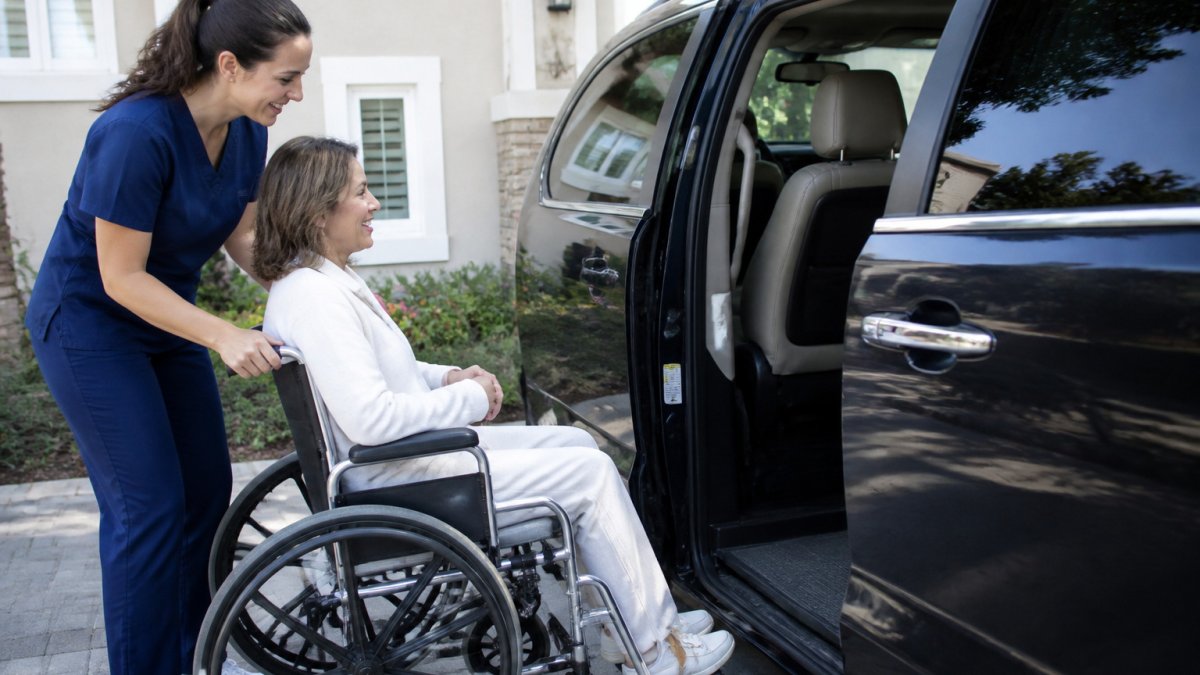
Door-to-door help matters more than many people realize. After sedation, stairs, curbs, and carrying bags can be difficult. A driver or attendant who helps you inside lowers the risk of falls.
Many patients find it useful to:
- Confirm the pickup window the day before surgery
- Save the driver’s phone number in your phone
- Ask how the driver will handle luggage and medical supplies
- Plan for a backup contact in case the ride is delayed
Contact Better U Recovery to discuss your transportation and recovery support options.
Step 4: Prepare Your Home and Your Caregivers for Discharge Day
Once your ride is booked, prepare the place where you will recover. A little planning at home makes the first night much easier.
Set up a comfortable space on one floor, stock water and light snacks, and keep medications and discharge instructions within reach. Arrange for someone to stay with you during the first night, since sedation can affect your ability to respond quickly.
Checklist for family members and caregivers
- Review the facility’s discharge instructions together
- Confirm the driver’s name, pickup time, and phone number
- Clear walkways and remove loose rugs
- Set up a recovery area with pillows, blankets, and a phone charger
Caregivers also play an emotional role. Surgery can leave patients anxious, and a calm, reassuring presence helps them settle.
When Hiring a Private Nurse for Post-Surgery Transport Makes Sense
Some patients need more support than a driver can give. A private nurse may be a good choice for patients who live alone, have complex needs, or want clinical oversight during transport and the first days of recovery. Most competitors stop at that sentence. The useful question is narrower: which patients actually benefit, and what does the nurse do that a caregiver cannot?
Clinical criteria that point toward nurse transport
A private nurse is not necessary for every procedure. Many patients recover well with a licensed driver and a responsible adult at home. Consider nurse transport when one or more of these apply:
- You live alone and cannot arrange an overnight caregiver.
- Your procedure involved extensive liposuction, abdominoplasty, or combined procedures with higher fluid and monitoring needs.
- You have a history of anesthesia complications, sleep apnea, or cardiac conditions your surgeon wants monitored.
- You are traveling with drains, a catheter, or oxygen and need someone trained to check them en route.
What a private nurse does during transport
Scope of practice depends on licensure, so ask the provider what the nurse is licensed to do. Typically, a transport nurse can help with:
- Monitor vital signs and level of consciousness during the ride.
- Check dressings and drains for unexpected bleeding or output.
- Help with safe transfers and positioning to protect incision sites.
- Administer or remind you of prescribed medications on schedule.
The psychological comfort angle
Most content on post-op transport is clinical, but the emotional side matters. Surgery can leave patients anxious, and the ride home is often the first time they are away from the surgical team. A calm, clinically trained presence reduces that anxiety and makes it easier to rest. If you are prone to post-op anxiety, tell your surgeon and your transport provider, a nurse who knows to expect it can reassure you and keep the trip quiet and unhurried.
Cost and insurance considerations
Private nurse transport is generally paid out of pocket. Coverage for elective cosmetic surgery and related transport varies by plan, so check with your insurer.
Better U Recovery offers concierge nursing services for patients recovering from cosmetic surgery, including safe transportation from surgery to home or hotel. Pricing depends on your needs and schedule, so contact us for a current quote.
Booking Your Safe Ride Home After Your Procedure
A safe ride home comes down to three things: knowing your facility’s rules, choosing the right transport for your needs, and planning help for the door-to-door trip. Start early, confirm every detail, and keep a backup plan ready.
If you want help arranging transportation and recovery support, reach out to Better U Recovery. Our team can walk you through your options and answer your questions before surgery day.
Frequently Asked Questions
Why can’t I drive myself home after cosmetic surgery?
Most cosmetic procedures are done under sedation or general anesthesia, and the effects can slow reaction time and judgment for many hours afterward. Many surgical facilities require an adult escort to accompany you home. Driving yourself also means you cannot easily respond if you feel faint or nauseated on the road. Confirm your facility’s specific discharge rules before your procedure day, and plan a ride that does not depend on you being alert enough to drive.
Can I use a standard rideshare app after surgery?
Many surgical centers do not allow patients to leave in standard rideshare vehicles, particularly when sedation was used, because drivers are not trained to assist recovering patients and the vehicle may not support safe entry and exit. Some facilities also require a responsible adult to stay with you after discharge. Check your facility’s written instructions and ask whether they recommend a medical transport provider or a private nurse-supported ride instead.
How do I choose a safe transportation service for post-op recovery?
Look for a provider that offers door-to-door assistance, vehicles that are ADA-compliant or wheelchair-accessible, and drivers or staff trained to help with mobility. Ask whether the provider can accommodate stretchers or specific medical equipment if you need them. Confirm pickup timing, how they coordinate with your surgical team, and whether they can accompany you into your home or hotel. Request written details before booking, and compare options by what they include rather than only by price.
Does insurance cover medical transportation after elective cosmetic surgery?
Coverage for transportation after elective cosmetic surgery varies, and many insurers do not treat these procedures as medically necessary. Coverage depends on your specific plan and the procedure, so contact your insurer directly and ask about non-emergency medical transport benefits. Your surgical office may also be able to tell you what its patients typically arrange. For current pricing and service details on Better U Recovery’s transportation support, contact the company directly for a quote.

No Comments