
25 Oct Do You Need Nursing Care After Cosmetic Surgery?
Last Updated: October 25, 2026
Quick Summary
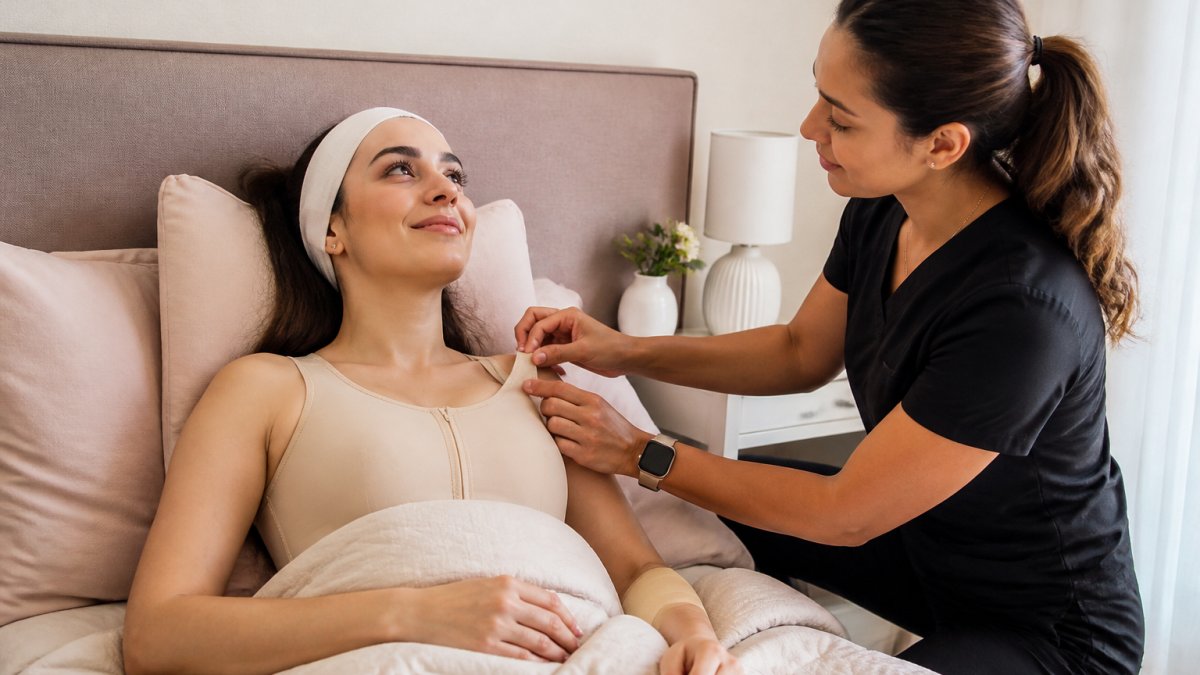
Whether you need nursing care after cosmetic surgery depends on the procedure type, your health history, and your living situation. Minor procedures may only need a trusted adult, but extensive surgeries like facelifts, tummy tucks, or multiple procedures often benefit from trained medical professionals who monitor vital signs, manage pain, and catch complications early.
- Most patients need intensive support during the first 48 to 72 hours when anesthesia lingers and complications are most likely.
- Tummy tucks require 2-3 nights of overnight nursing care, while breast surgery typically needs 1-3 days of continuous care followed by intermittent visits.
- A trained nurse with BLS/ACLS certification can spot infection, bleeding, or other warning signs at hour 6 instead of hour 48, preventing emergency room visits.
- Ask your surgeon for a written care level recommendation before booking: companion only, part-time nurse, overnight nurse, or facility.
- Living alone, having diabetes or bleeding disorders, or undergoing major surgery increases the case for professional clinical oversight.
Table of Contents
- When Nursing Care After Cosmetic Surgery Makes Sense
- How Long Do You Need a Nurse After Surgery
- Post-Op Nurse Duties During Your Recovery
- Signs of Complications After Cosmetic Surgery
- Questions to Ask a Post-Operative Nurse
- Alternatives to Full-Time Nursing Support
- Planning Your Post-Surgery Recovery Support
- Frequently Asked Questions
When Nursing Care After Cosmetic Surgery Makes Sense
Whether you need nursing care after cosmetic surgery depends on the procedure, your health, and your recovery environment. Minor procedures may only need a trusted friend or family member, but extensive surgeries like facelifts, tummy tucks, or multiple procedures often benefit from trained medical professionals. (Source: The American Society of Plastic Surgeons’ 2023 statistics)
At Better U Recovery, we help patients understand what their recovery actually demands. Some manage fine at home alone; others face serious risks without professional support.
The answer depends on surgery type, living situation, health history, and your ability to follow post-operative instructions.
Nursing care after cosmetic surgery isn’t a luxury, it prevents complications, manages pain, and speeds healing. Explore the specific benefits of post-surgery nursing care to help you decide if you need it.
How Long Do You Need a Nurse After Surgery
Most patients need the most intensive support during the first 48 to 72 hours, when anesthesia lingers, pain peaks, drains need attention, and complications are most likely. After that, many step down to part-time visits or family support.
But the honest answer depends far more on the procedure than a generic timeline. Here is how needs differ, your surgeon’s instructions always override general guidance.
Breast surgery (augmentation, lift, reduction)
- First 24-72 hours: Supervision matters most. Patients often need help with drain management, pain medication timing, and getting out of bed without using the arms. Many surgeons restrict arm movement and lifting, so a nurse or caregiver helps with dressing, bathroom use, and repositioning.
- Days 3-7: Part-time visits are often enough for incision checks and medication review. Watch for asymmetry, excessive swelling on one side, or fever.
- Typical professional care window: 1-3 days of continuous or overnight care, then intermittent visits for about a week.
Liposuction (including awake and tummy-focused variants)
- First 24 hours: Anesthesia type drives the need. General anesthesia or heavy sedation usually means someone should stay with you the first night. Patients in compression garments need help with garment placement, fluid intake, and safe movement.
- Days 2-7: The main risks are dehydration, fainting during early mobilization, and seroma formation. A nurse can check for fluid pockets and reinforce compression instructions.
- Typical professional care window: 1 night of overnight care for general anesthesia cases; otherwise a responsible adult plus a next-day check may suffice.
Facelift and facial procedures
- First 24-48 hours: Elevation, cold compresses, and drain or dressing checks dominate. Patients often need help keeping the head elevated during sleep and monitoring for hematoma, a time-sensitive complication whose signs can be subtle.
- Days 3-10: Suture and staple removal, incision care, and swelling monitoring. Part-time visits work well.
- Typical professional care window: 1-2 nights of overnight care, then visits through the first week to ten days.
Tummy tuck (abdominoplasty)
- First 48-72 hours: One of the most demanding cosmetic recoveries. Patients usually cannot stand fully upright, have drains, and need help with walking, bathroom use, and getting in and out of bed. Pain control and clot prevention (early, safe walking) are central.
- Days 3-14: Drain management, incision checks, and gradual mobility. Seroma and wound-healing problems are common enough that regular professional checks help.
- Typical professional care window: 2-3 nights of overnight care, then part-time visits for one to two weeks.
Multiple procedures (combination surgery)
Combined procedures mean longer anesthesia, larger fluid shifts, and more limited mobility. Plan for the longer end of each procedure’s range and expect a step-down rather than a single cutoff.
What changes the timeline
- Anesthesia type: General anesthesia and long sedation increase the need for first-night supervision.
- Drains and catheters: These require trained handling and increase the value of professional care.
- Medical history: Diabetes, sleep apnea, bleeding disorders, and heart conditions push the timeline longer and raise the case for licensed clinical oversight.
The first night is the highest-risk period. A trained nurse catches problems early, infection signs, excessive bleeding, blood pressure drops, medication reactions, before they become emergencies. Follow your surgeon’s instructions exactly.
Ask your surgeon for a written “care level” recommendation before you book anything: companion only, part-time nurse, overnight nurse, or facility. That one sentence prevents most over- and under-booking.
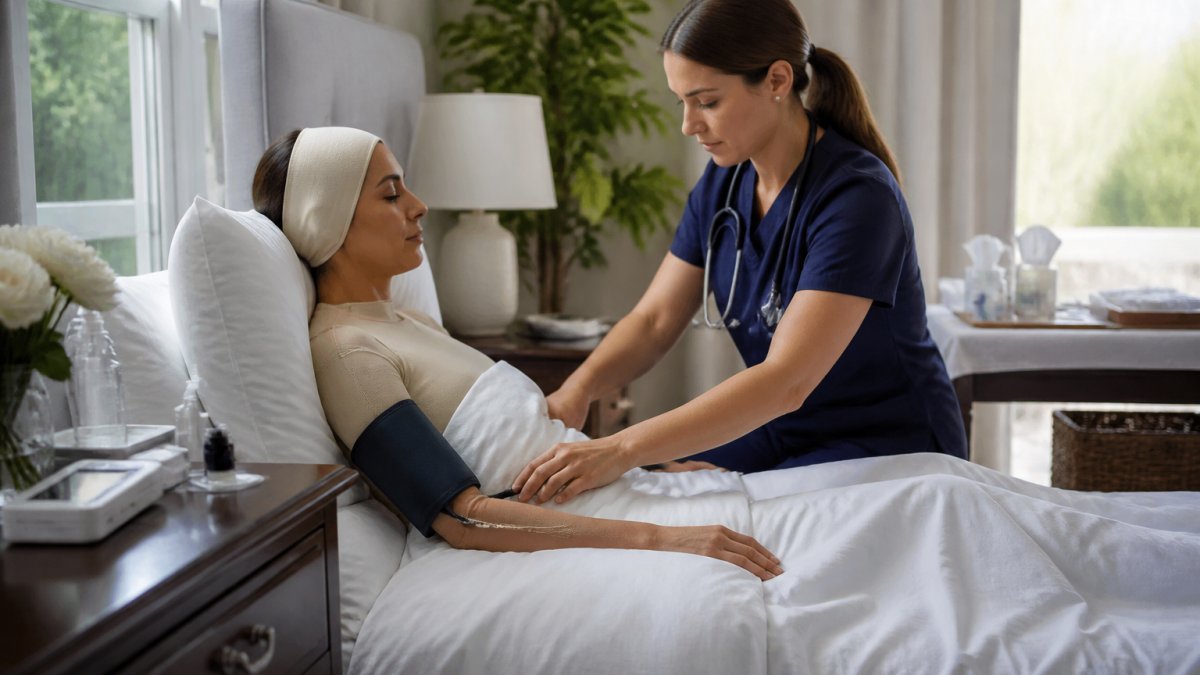
Recovery timelines and professional care needs vary significantly by procedure type.
| Procedure | First 24-72 Hours | Days 3-7+ | Typical Professional Care Window |
|---|---|---|---|
| Breast surgery | Supervision for drains, pain medication, arm restrictions | Part-time visits for incision checks | 1-3 days continuous, then intermittent visits |
| Liposuction | Anesthesia type determines need; compression garment help | Monitor for dehydration and seroma | 1 night overnight for general anesthesia |
| Facelift | Elevation, cold compresses, drain checks, hematoma monitoring | Suture removal, incision care, swelling checks | 1-2 nights overnight, then weekly visits |
| Tummy tuck | Cannot stand upright, drains, help with mobility and bathroom | Drain management, incision checks, seroma monitoring | 2-3 nights overnight, then 1-2 weeks part-time |
| Multiple procedures | Longer anesthesia, larger fluid shifts, limited mobility | Extended timeline per each procedure | Plan for longer end of each procedure’s range |
Post-Op Nurse Duties During Your Recovery
Vital sign monitoring is foundational.
Pain management requires expertise.
Wound care and dressing changes demand sterile technique.
Medication administration prevents dangerous mistakes.
Mobility assistance matters more than you’d expect. Early movement prevents blood clots.
Hydration and nutrition support accelerates healing.
Symptom monitoring and escalation is perhaps most important.
Better U Recovery nurses are BLS/ACLS certified, meaning they’re trained in emergency response.
Learn more about what post-op care involves in detail
Signs of Complications After Cosmetic Surgery
Your surgeon will give you a list of warning signs. Learn it. If you see any of these, contact your surgeon or go to an emergency room immediately:
- Fever above 101°F that doesn’t improve with over-the-counter medication
- Excessive bleeding that soaks through dressings or doesn’t slow down with pressure
- Severe or worsening pain that pain medication doesn’t control
Get detailed information about recognizing complications
The difference between a minor issue and a major one often comes down to timing. A small infection caught early responds to antibiotics; ignored for a week, it can become life-threatening.
This is why nursing care after cosmetic surgery prevents ER visits. A trained professional spots problems at hour 6, not hour 48, early intervention saves money, prevents hospitalization, and protects your results.
Questions to Ask a Post-Operative Nurse
Before hiring nursing support, ask specific questions to confirm the nurse understands your needs and can deliver the care you require.
Certification and experience:
- “Are you BLS and ACLS certified?” (Non-negotiable for post-operative care)
- “How many cosmetic surgery patients have you cared for?”
- “What’s your experience with my specific procedure type?”
Care specifics:
- “How often will you check vital signs?”
- “How do you handle pain medication administration?”
- “What’s your protocol if I develop a fever or other warning sign?”
Availability and response:
- “What hours will you be here?”
- “How do I reach you if something happens outside those hours?”
- “If I need emergency care, will you accompany me?”
Your comfort:
- “Can you help me with personal hygiene and bathroom needs?”
- “How will you handle privacy and dignity during care?”
- “Are you comfortable with my specific recovery environment?” (Source: guidelines from the Centers for Medicare & Medicaid Services (CMS))
These questions reveal whether a nurse is qualified and whether you’ll work well together. Don’t settle for vague answers.
Alternatives to Full-Time Nursing Support
Full-time nursing care is not the only option. The useful question is not “nurse or no nurse” but “what level of supervision does my procedure, health history, and home situation actually require?” Here is a practical comparison, including when each option is a poor fit.
1. A responsible adult companion (friend or family)
What it is: A non-medical adult who stays with you for the first 24 hours, helps with mobility, meals, medication reminders, and can call for help.
Best for: Minor procedures, healthy patients, people with a capable adult who can stay overnight.
When it is not enough: The companion cannot reliably recognize complications, cannot perform sterile dressing changes, and may not manage multiple medications safely. If you live alone, have sleep apnea, diabetes, or a bleeding disorder, or are having a major procedure, a companion alone is usually insufficient.
Cost factors: No professional fee, but there is an opportunity cost if the person takes time off work.
2. Trained non-clinical caregiver (home aide)
What it is: A paid caregiver who helps with activities of daily living, bathing, dressing, toileting, meals, mobility, but is not licensed to perform clinical tasks such as wound care or medication administration in most settings.
Best for: Patients who mainly need hands-on help with daily activities and have a separate plan for clinical checks.
When it is not enough: If you need drain management, sterile dressing changes, vital sign monitoring, or IV hydration, a non-clinical aide is the wrong level of care.
Cost factors: Typically billed hourly with minimum shift lengths; overnight and weekend rates are higher.
3. Private-duty nurse (RN or LPN)
What it is: A licensed nurse providing one-on-one care at home, including vital signs, medication administration, wound and drain care, and complication monitoring.
Best for: Major procedures, combination surgery, complex medical history, living alone, or anyone whose surgeon recommends clinical monitoring.
When it is not enough: A private-duty nurse is not a substitute for emergency care.
Cost factors: Priced hourly or per shift, with overnight shifts costing more. Total cost depends on shift length, number of nights, and whether the nurse is an RN versus an LPN.
4. Licensed recovery facility
What it is: A supervised setting with staff on site, often affiliated with or near surgical centers.
Best for: Patients who live alone, have no reliable home support, or want clinical oversight without arranging individual home care.
When it is not enough: Staff-to-patient ratios are usually lower than 1:1 home nursing, so you get less personalized attention.
Cost factors: Usually priced per night, often with tiers based on level of care. Confirm what is included (meals, transportation, medication administration) versus billed separately.
5. Telehealth and remote check-ins
What it is: Video or phone follow-ups with your surgeon’s office or a nursing service.
Best for: Answering questions and reviewing recovery progress once you are stable.
When it is not enough: Remote check-ins cannot assess a wound, take vital signs, or physically intervene. They complement in-person care; they do not replace it in the first 24-72 hours.
How to choose: a short decision guide
Ask yourself these questions in order:
- What did my surgeon recommend in writing? Start there. If the recommendation is overnight clinical monitoring, do not substitute a friend.
- Do I live alone or lack an overnight adult? If yes, lean toward overnight nursing or a facility for at least the first night.
- Do I have a condition that raises risk (sleep apnea, diabetes, bleeding disorder, heart condition, high BMI, or a history of clots)? If yes, licensed clinical oversight is the safer default.
- Does my procedure involve drains, catheters, or complex wound care? If yes, you need someone licensed to handle them.
- What is my budget and what does insurance cover? Cosmetic surgery is generally excluded from health insurance coverage, and post-operative nursing is usually an out-of-pocket cost. Ask providers for itemized quotes and confirm cancellation policies before surgery.
Credential and safety checks before you hire anyone
- Verify the nurse’s license through your state’s board of nursing lookup.
- Confirm current BLS certification, and ACLS if the nurse will handle emergencies.
- Ask how many post-anesthesia or cosmetic surgery patients the nurse has cared for.
No alternative removes the need for an emergency plan. Keep your surgeon’s after-hours number, a charged phone, and a written list of warning signs within reach no matter which option you choose.
The reality: alternatives work for some and fail for others. A patient living alone with a complex medical history after major surgery faces genuine risks without professional support; a healthy person with family nearby might manage fine. Your specific situation determines what makes sense.
Better U Recovery specializes in personalized, round-the-clock nursing care designed for cosmetic surgery recovery. Our BLS/ACLS certified nurses provide 1:1 attention, custom care plans, IV hydration support, and safe transportation from surgery to home. We prevent emergency room visits by catching complications early and managing your recovery with professional expertise and compassionate support.
Explore concierge post-op nursing services as an alternative approach
Planning Your Post-Surgery Recovery Support
Start planning your recovery support before surgery.
Step 1: Talk to your surgeon
Ask what your specific recovery demands.
Step 2: Assess your situation
- Do you live alone?
- Will family or friends be available full-time?
- Do you have any health conditions that complicate recovery?
Honest answers matter. Don’t assume you’ll manage fine if the reality is uncertain.
Step 4: Prepare your recovery space
Learn how to prepare your home for surgery recovery
Set up a comfortable room where you’ll spend most of your recovery.
The answer to whether you need nursing care after cosmetic surgery isn’t one-size-fits-all.
Frequently Asked Questions
Do I really need nursing care after cosmetic surgery, or can I manage alone?
Whether you need nursing care after cosmetic surgery depends on your specific procedure, anesthesia type, and your support system. Minor procedures with local anesthesia may require minimal oversight, while more invasive surgeries (facelift, tummy tuck) typically benefit from professional monitoring during the critical first 24-48 hours. A trained medical professional can catch early complications, manage pain effectively, and prevent emergency room visits. If you live alone, lack experienced caregivers, or had general anesthesia, professional post-operative care significantly reduces risk and stress.
What qualifications should a post-operative nurse have?
Your post-operative nurse should hold current BLS (Basic Life Support) and ACLS (Advanced Cardiovascular Life Support) certifications and be a registered nurse (RN) with experience in post-surgical care. Look for nurses trained in wound care, medication management, and complication recognition. Verify their background in recovery settings such as PACU (Post-Anesthesia Care Unit), ICU, or med-surg units. Ask about their specific experience with cosmetic surgery recovery, this specialized knowledge ensures they understand procedure-specific needs and can respond appropriately to your unique healing requirements.
What are the main signs of complications after cosmetic surgery I should watch for?
Watch for excessive bleeding, swelling that worsens after day 3, increasing pain despite medication, fever above 101°F, redness or warmth around incisions, pus or unusual drainage, difficulty breathing, chest pain, or signs of infection. Numbness or tingling beyond the first 48 hours, severe bruising that spreads unexpectedly, or difficulty moving the surgical area may also signal complications. A trained nurse can distinguish normal healing from concerning symptoms and escalate to your surgeon or emergency care when needed, preventing minor issues from becoming serious problems.
How much does post-operative nursing care cost, and is it covered by insurance?
Post-operative nursing care pricing depends on the level of care, duration, frequency of visits, and whether you need overnight or round-the-clock support. Most cosmetic surgery recovery is elective and typically not covered by insurance, making it an out-of-pocket expense. Contact Better U Recovery directly for a personalized quote based on your procedure and recovery needs. Some patients find that preventing complications through professional care avoids costly emergency room visits, potentially offsetting the investment in preventive post-operative support.

Sorry, the comment form is closed at this time.